Photography
Photographing whales in Tromso: the hardest light you will ever shoot in
A moving animal, from a moving boat, in an hour of twilight, at a distance, in the cold. There is no harder combination in wildlife photography, and it produces pictures that look like nowhere else on earth. This page is what actually works, from people who have got it wrong.
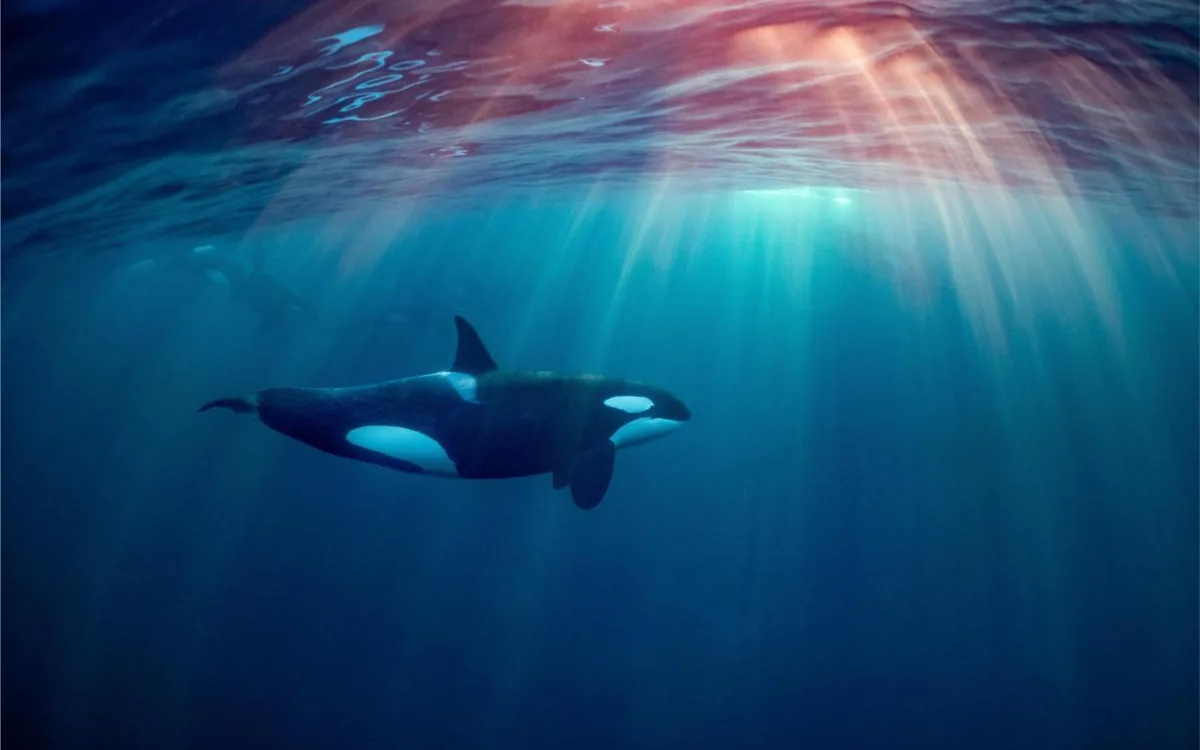
Quick answer
Shoot fast, shoot wide and take the RIB. In December you are working in four to six hours of blue twilight, so a bright lens and a camera that tolerates high ISO matter more than reach. A rigid inflatable at $245 puts you a metre above the water with no glass and no railing, which changes the picture more than any lens will. On a big boat, stand on the top deck and accept the compromise.
Shooting a whale safari, at a glance
- The light
- Twilight in Decemberfour to six hours of blue and pink
- Best boat
- RIBeye level, no glass
- Best lens
- 70–200 mm, fastreach matters less than aperture
- Shutter
- 1/1000 or fasterboat vibration ruins more shots than movement
- ISO
- High, and accept the noisea noisy sharp frame beats a clean blurred one
- Batteries
- Two, kept warmcold halves their life
- Lens fogging
- On the way insidenot on deck. Bag it before you go in
- Phone cameras
- Fine for scale shotspoor at distance in low light
- The best frame
- Animal plus landscapenot a tight crop of a fin
- What to wear
- Thin gloves under warmyou cannot shoot in mittens
The settings that actually matter
Three decisions, in order of importance
Fast shutter, bright lens, wide frame — and crop at home.
Shutter speed. The enemy is not the whale, it is the boat. Engine vibration and swell put movement into every frame, and it shows at anything under about 1/500. Start at 1/1000 and push the ISO to get there. A grainy sharp photograph of a breaching humpback is a photograph; a clean blurred one is nothing.
Aperture over reach. In polar twilight an f/2.8 zoom at 200 mm will beat an f/6.3 zoom at 600 mm every time, because the long slow lens forces an ISO you cannot afford. Most of the best whale pictures from this coast are taken between 70 and 200 mm and include the landscape.
Focus mode. Continuous autofocus with a wide zone, not a single point. The animal appears without warning, moves unpredictably and is usually against water that gives the camera nothing to lock onto. Back-button focus helps if you use it.
And one habit worth more than any setting: frame wide and crop later. A fin at the edge of a big frame is recoverable; a fin half out of a tight frame is not.
Practical, on the day
Six things that decide whether you come home with pictures
Cold, salt and battery life do more damage than technique.
- Two batteries, one against your body
Lithium cells lose capacity fast at minus four. A warm spare in an inside pocket doubles your day.
- Thin gloves under warm ones
You cannot operate a camera in mittens and you cannot stand six hours without gloves. Wear both.
- Never wipe a fogged lens
Condensation from carrying a cold camera into a warm cabin is inside the glass. Bag the camera before you go in and let it warm slowly.
- Wear dark clothing
On a boat with windows, a bright jacket reflects into every frame.
- Shoot the scale shots too
A whale beside the boat, people at the rail, a fin against a mountain. They tell the story better than the crop does.
- Put the camera down once
Watch one full surfacing with your eyes. Every photographer who does this says it was the part they remember.
The boat you choose changes the photographs more than the lens does — and the comparison is worth reading first.
RIB, catamaran or hybrid→Five frames worth planning for
Beyond the fin and the fluke
The pictures people are still pleased with a year later.
- The blow against the light
A column of vapour lit from behind in low sun is the most reliably beautiful frame on the trip.
- Boat and whale in the same frame
It gives scale, which a tight crop of an animal never does.
- Birds working the herring ball
Gulls and eagles diving mark the feeding, and it photographs better than the whales sometimes do.
- People at the rail
Faces in flotation suits, in blue light. This is the frame that ends up on the wall.
- The run home
Tromsø lit up under black mountains, or the aurora over the wake.
Common questions
Whale photography in Tromso, answered
What lens should I bring for whale watching in Tromso?
A fast 70–200 mm is the workhorse. In polar twilight, aperture matters more than reach — a slow super-telephoto forces an ISO the light cannot support.
What shutter speed?
1/1000 or faster. Boat vibration ruins more frames than the animals do.
Is a phone good enough?
For scale shots and for the landscape, yes. For a distant fin in December twilight, no.
Which boat is best for photography?
A RIB. You sit a metre above the water with no glass and no railing, which changes the angle completely.
How do I stop my lens fogging?
Do not carry a cold camera straight into a heated cabin. Put it in a bag first and let it warm slowly.
How many batteries should I bring?
At least two, with the spare kept warm against your body. Cold roughly halves battery life.
Go deeper
More on Tromso whale watching
Whale watching from Tromso
What the season is, what you see and how the day runs.
The verdictWhich safari is best
Seven safaris ranked, and which suits which traveller.
SeasonSeason and sightings
November to January, and why the dates move with the fish.
OrcaOrca in Tromso
Family groups, herding herring, and where to see them.
SkjervoySkjervoy safaris
Why the boats sail three hours north, and what it buys.
SilentThe silent boat
What a hybrid-electric hull changes when you approach a whale.
