The herring
Why whales come to Tromso: the herring, and the largest fish stock in the North Atlantic
Everything on this site rests on one animal, and it is not a whale. Norwegian spring-spawning herring number in the tens of billions, they overwinter in northern fjords, and everything with teeth follows them in. Understanding the fish explains the season, the distances and why the tours keep moving north.
Quick answer
Whales come to Tromso because Norwegian spring-spawning herring overwinter in the fjords here in enormous concentrations. The stock is one of the largest in the North Atlantic. Humpbacks and orca follow it in from about November, feed until the fish disperse in January, and leave. Where the herring gather has shifted over the decades — Vestfjorden, then Kvænangen, now around Skjervøy — and the tours have followed.
The herring, at a glance
- Species
- Atlantic herringNorwegian spring-spawning stock
- Size of stock
- Among the largestin the North Atlantic
- What they do here
- Overwinterin deep sheltered fjord water
- When
- ~Oct – Janthen south to spawn
- What follows them
- Humpbacks and orcaplus fin whales and birds
- Wintering grounds, 1990s
- Vestfjordennear Lofoten
- Then
- Kvænangenfurther north-east
- Recently
- Around Skjervøy2–3 hours north of Tromsø
- Why it matters
- It sets the seasonand the length of every safari
- Also feeding on them
- Sea eagles, gullswhich is how crews find the whales
The winter concentration
Why a fjord full of fish attracts everything
Millions of dormant fish in a deep fjord: the easiest meal in the North Atlantic.
Herring spend the summer feeding in the Norwegian Sea, growing on plankton in cold, productive water. As the light fails they stop feeding and move into sheltered water to wait out the winter in a state close to dormancy, packed into enormous shoals in the deep basins of the fjords.
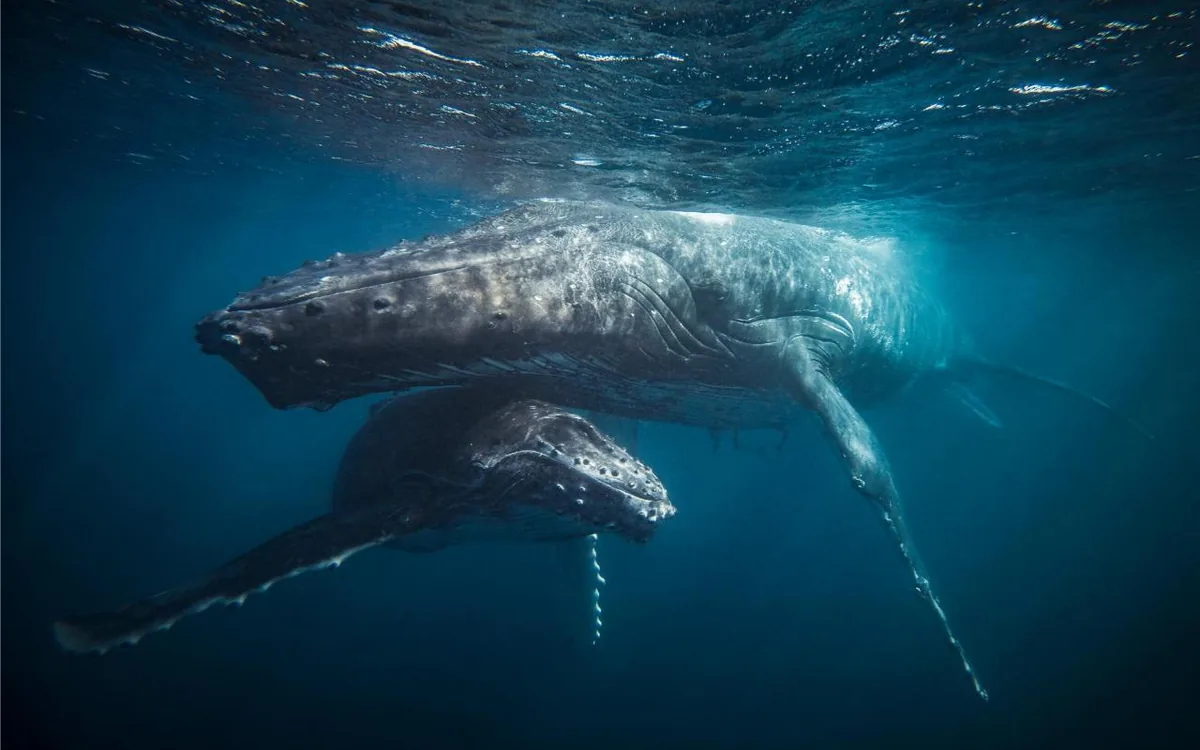
For a predator this is the easiest food in the North Atlantic: millions of fish, concentrated, sluggish and predictable. Humpbacks arrive from breeding grounds thousands of kilometres away specifically to feed on them. Orca that live along this coast all year concentrate wherever the shoals are. Sea eagles, gulls and kittiwakes work the same water.
In late winter the herring leave, moving south along the coast to spawn off Møre. The whales disperse behind them and the season ends — not gradually, but over a couple of weeks.
This is also why nobody can promise a sighting. The fish are dense but they move, the whales follow, and a boat that found forty orca on Tuesday can find nothing on Thursday. Good operators talk to each other by radio precisely because of that.
Why the address keeps changing
Three wintering grounds in thirty years
Vestfjorden, Kvænangen, Skjervøy — and the tours moved with the fish.
Where the herring overwinter is not fixed. Through the 1980s and 1990s the winter shoals sat in Vestfjorden, inside Lofoten, and the whale watching industry grew up around Andenes and the Lofoten towns.
In the 2010s the concentration moved north-east into Kvænangen, and Tromsø became the natural base. In recent seasons the fish have gathered around Skjervøy, further north again, which is why the longest safaris on this page drive or sail two to three hours before they start looking.
The drivers appear to be a mix of water temperature, the size of each year class of fish and where the plankton is. Nobody predicts it far in advance. What operators can tell you is where the animals were last week, and that is the question worth asking before you book a six-hour trip.
It is also a reminder that this is wildlife rather than a show. The whales are not performing in a fixed venue; they are following food across a coastline, and the tours are chasing both.
What this means for your booking
Five practical consequences of a moving food source
All of them are things the listings will not tell you.
- Ask where the whales are this week
Every operator knows and the honest ones will say. It decides whether a six-hour trip is enough.
- Longer trips often mean more whale time
Counter-intuitively, the twelve-hour day can put you among the animals for longer than the six-hour one.
- The season has hard edges
It starts when the fish arrive and ends when they leave. February bookings are a gamble.
- Sighting rates are seasonal, not fixed
A good year and a poor year differ, and operators publish their rates rather than guarantees.
- Watch the birds on the day
Feeding gulls and eagles mark the shoal, and the shoal marks the whales.
Skjervøy is where the fish have been lately, and it is why the boats now sail three hours north.
Skjervøy safaris→Where else the herring take the whales
Five places along this coast that have had their turn
The season has moved before, and each move created a local industry.
- Vestfjorden and Lofoten
The wintering ground through the 1980s and 1990s, and the reason Andenes built a whale watching industry.
- Kvænangen
The concentration of the 2010s, north-east of Tromsø.
- Skjervøy
Where the fish have been in recent seasons, and where most of these safaris now go.
- Andfjorden
A regular alternative when the shoals split, west of Tromsø.
- Wherever next
Nobody predicts it. Ask the operator where they were finding animals last week.
Common questions
The herring and the whales, answered
Why do whales come to Tromso in winter?
Because Norwegian spring-spawning herring overwinter in the fjords here in enormous concentrations, and humpbacks and orca follow the fish in to feed.
How long do they stay?
From about November until the herring disperse in January to spawn further south. The whales leave with them.
Why do the tours travel so far now?
Because the wintering grounds have shifted north over the past decades — from Vestfjorden to Kvænangen and now around Skjervøy.
Will the whales be somewhere else next year?
Possibly. The fish have moved before and will move again. Operators track it week by week.
What else feeds on the herring?
Fin whales, white-beaked dolphins, sea eagles, gulls and kittiwakes — and the fishing fleet, which works the same shoals.
Does the fishing affect the whales?
Norwegian herring is quota-managed and the stock is monitored closely. Boats and whales work the same water and, on the day, the birds show you both.
Go deeper
More on Tromso whale watching
Whale watching from Tromso
What the season is, what you see and how the day runs.
The verdictWhich safari is best
Seven safaris ranked, and which suits which traveller.
SeasonSeason and sightings
November to January, and why the dates move with the fish.
OrcaOrca in Tromso
Family groups, herding herring, and where to see them.
SkjervoySkjervoy safaris
Why the boats sail three hours north, and what it buys.
SilentThe silent boat
What a hybrid-electric hull changes when you approach a whale.
